

Feeling the squeeze to accelerate operations while keeping a tight rein on supplier relationships? You're not alone. Many teams grapple with scattered supplier data trapped in spreadsheets and siloed tools that just won't talk to each other. This disjointed approach turns managing supplier contracts into an unnecessary headache.
Sourcing and Supplier Information Management works best when supplier data and contracts exist in the same ecosystem. Contract Lifecycle Management (CLM) platforms help bring structure and visibility to supplier relationships by connecting sourcing decisions, supplier data, and supplier agreements into one continuous lifecycle.
What is Supplier Information Management (SIM)?
Picture this: a single, clear hub for all your supplier data. That's the power of SIM. SIM is the process of collecting, organizing, maintaining, and governing supplier data across the procurement lifecycle. It ensures teams can access accurate supplier records, performance data, compliance documentation, and supplier agreements in one place. This system supports sourcing and supplier contract management by creating a reliable source of truth for supplier information.
SIM is important because it allows for:
- Operational consistency: Centralized supplier records reduce duplication and manual reconciliation.
- Risk awareness: Supplier certifications, insurance documentation, and contractual obligations remain visible and up to date.
- Strategic sourcing insight: Reliable supplier data improves supplier selection and negotiation outcomes.
When SIM connects directly to CLM solutions, supplier relationships become remarkably easier to manage.
Challenges in sourcing and supplier contract management
It's no secret that supplier ecosystems have grown more complex. Departments must now balance cost optimization, compliance requirements, supplier performance monitoring, and global risk management while maintaining strong supplier relationships.
Data silos and manual processes
Supplier information and agreements frequently live in separate systems. As a result, Procurement may track supplier onboarding data in a single tool, while Legal manages supplier contracts elsewhere. This fragmentation leads to:
- Disorganized supplier records.
- Limited contract visibility.
- Approval bottlenecks.
These disconnects often spark frustration between teams, especially when urgent sourcing needs clash with crucial risk assessments.
Complex regulations and geopolitical risks
Global supply chains operate under increased regulatory scrutiny and geopolitical uncertainty. Teams have to continuously evaluate trade restrictions, regional compliance requirements, and supplier risk. Without centralized contract visibility, organizations often struggle to respond swiftly to new regulations or sudden supply disruptions.
The demand for ESG compliance and supply chain resilience
Environmental, Social, and Governance (ESG) expectations continue to shape supplier selection and monitoring. Organizations must track critical supplier certifications and ethical sourcing documentation right alongside contractual obligations.
SIM systems alone can't manage this complexity. CLM platforms help connect supplier commitments to enforceable contractual terms, which helps with accountability and transparency.
How can CLM improve sourcing and supplier relationships?
CLM platforms strengthen Sourcing and Supplier Information Management by connecting supplier data with supplier agreements across the full lifecycle.
1. Centralizing supplier and contract data for unified visibility
A CLM platform creates a shared system of record where supplier agreements and data live. Professionals can instantly access supplier obligations, renewal timelines, and performance requirements without wasting time searching across multiple tools. This unified visibility dramatically improves coordination between departments and slashes sourcing delays caused by missing contract information.
2. Automating contract workflows for faster sourcing cycles
CLM platforms digitize supplier contract workflows, reducing manual contracting steps that can slow down sourcing initiatives. Standard approval routing and centralized collaboration improve cycle times while maintaining governance. Automation reduces repetitive administrative work while preserving necessary review processes.
3. Standardizing contracts with pre-approved language
Supplier agreements often feature recurring clauses. CLM solutions allow teams to use pre-approved language that perfectly aligns with organizational policies. Standardization boosts consistency and significantly reduces negotiation friction, especially when bringing new suppliers on board.
4. Monitoring performance and compliance throughout the lifecycle
Supplier relationships don't end at contract signature. CLM platforms help organizations track supplier obligations, renewal dates, performance commitments, and compliance documentation across the lifecycle. Lifecycle visibility strengthens supplier relationships by keeping expectations clear and measurable.
The role of AI in supplier management
Artificial Intelligence (AI) is fundamentally reshaping how organizations manage supplier relationships by improving visibility into supplier risk, contract obligations, and sourcing opportunities. AI-enhanced CLM platforms help teams analyze supplier agreements and supplier data more efficiently.
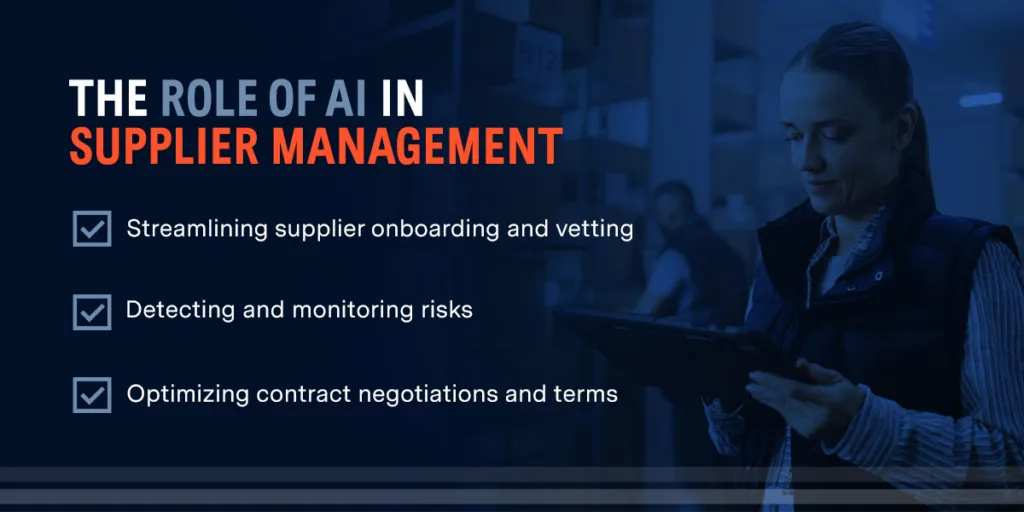
Streamlining supplier onboarding and vetting
AI-enhanced workflows help teams review supplier documentation faster during onboarding. They can validate supplier certifications, insurance documentation, and compliance requirements more efficiently when supplier information is centralized. This process improves consistency while reducing administrative workload.
Detecting and monitoring risks
AI-enhanced contract analysis improves visibility into supplier obligations and compliance requirements across supplier agreements. Instead of relying on manual reviews, contracting professionals can identify potential issues earlier in the supplier lifecycle.
Optimizing contract negotiations and terms
AI-enhanced CLM platforms use contract data patterns to improve negotiation preparation and ensure consistent supplier agreements. This information makes it easier to understand common clause variations and supplier commitments across agreements.
Key components of a supplier information management system
A modern SIM system truly shines when integrated with CLM solutions. Together, these capabilities support supplier contract management and supplier compliance across the lifecycle.
- Centralized supplier portal for onboarding and data collection: Supplier portals provide structured onboarding workflows that capture supplier documentation and contact information. Centralized data collection reduces onboarding friction and improves data accuracy.
- Integrated contract repository for supplier agreements: A unified contract repository ensures supplier agreements remain searchable, secure, and accessible.
- Performance tracking and risk assessment tools: Supplier performance metrics, service level commitments, and risk indicators help organizations monitor supplier relationships over time.
- Compliance management and audit trails: Audit trails and compliance documentation tracking help organizations maintain regulatory readiness across supplier relationships.
- Reporting and analytics for strategic insights: Rich supplier and contract data can support decision-making when reporting tools provide clear visibility into supplier performance trends, critical contract timelines, and impactful sourcing outcomes.
Why is SIM necessary for modern procurement?
At its core, SIM gives teams a way to navigate supplier relationships with crystal-clear visibility and unwavering control. Imagine all supplier data and contracts living harmoniously within a single, unified lifecycle. This integration grants organizations unparalleled oversight.
SIM improves supplier contract management by reducing manual processes and strengthening supplier accountability. When combined with CLM solutions, organizations can respond more effectively to regulatory changes, supplier risks, and sourcing opportunities.
As supplier ecosystems grow more complex, integrated SIM and CLM software capabilities mean organizations can stay agile.
Learn more about CLM software for supplier compliance

Discover how cutting-edge CLM software can elevate supplier compliance. Explore how Agiloft's CLM platform helps organizations improve sourcing and supplier information management.
Request a demo to explore how supplier contract management can become more connected, visible, and manageable.


Learn how Agiloft
can impact your business.
Global users necessitated templates across multiple languages and flexibility to localize
.jpg)

.webp)