

Introducing Astra: AI Powered Contract Intelligence, Now for Everyone


Those who don’t manage their vendor contracts effectively face risk, lost revenue, and too much time spent fixing mistakes.



Many businesses and organizations acquire goods and services from third-party vendors. Vendors are those whom organizations pay in exchange for deliverables that benefit those organizations.
The types of vendors vary widely based on an organization’s needs. They range from manufacturers and wholesalers to service and maintenance providers such as accountants, consultants, insurers, and those who maintain the physical properties of offices, like landscapers and cleaners.
However, good vendor management extends far beyond these direct transactions.
To make investing in what a vendor provides your organization worthwhile, you must make informed decisions from the planning stages to onboarding to managing relationships and tracking performance. This vendor management process and your vendor management system are crucial whether you are dealing with one or one hundred or more vendors.
Those who don’t manage their vendor contracts and relationships effectively face increased risk, potential lost revenue and profits, and too much time spent fixing mistakes that could’ve been avoided with a more streamlined process.
One crucial yet often overlooked aspect of vendor management is how vendor contracts are handled throughout their life cycles. Managing contracts well, from initiation to completion or renegotiation, leads to more lucrative vendor relationships. Strong processes and practices, in turn, lead to better-performing vendor contracts.
As a result, you’re more likely to meet vendor performance expectations and other business goals with good vendor management practices in place.
Vendor lifecycle management begins long before an organization initiates contract negotiations and continues long after a contract is signed. Here are a few of the key steps involved in the process:
Good management practices allow an organization to determine which contracts perform well and which are underperforming or obsolete. It also allows for more compliant and profitable long-term relationships.
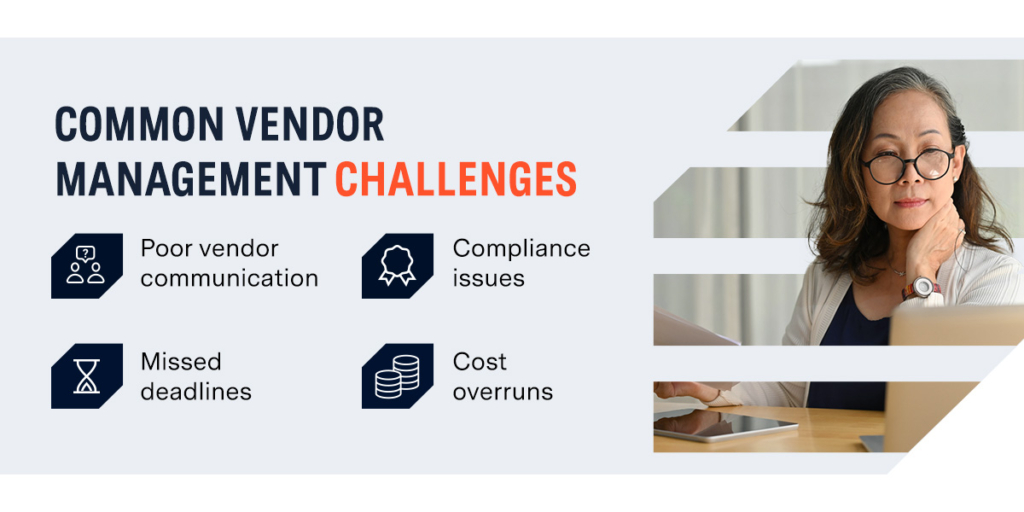
Vendor management isn’t as simple as telling vendors what you want. It’s a complex relationship that requires companies to monitor costs, compliance, and vendor efficiency. These challenges can disrupt operations, impacting profits if left unchecked:
A vendor management system is software that helps businesses streamline vendor handling. A company’s vendor relationships, performance, and contracts are easily managed from one central platform. This solution tracks vendor agreements, automates approvals, checks compliance, and oversees other critical tasks.
These systems consolidate all vendor data and contracts, delivering valuable performance metrics data while supporting more efficient management. Businesses can use management systems to reduce their administrative burdens, reduce risks, and create stronger vendor relationships.
There are many benefits organizations may enjoy from vendor management. You want to get the best deals on goods and services possible to maximize your revenue and profit goals, as well as get the best performance out of vendors. Vendor management helps achieve this. Here are a few additional benefits.
It should go without saying that each decision within an organization should be made in such a way that mitigates potential risks as much as possible. Proper vendor management can help avoid risks such as issues with compliance, cost, operation, and reputation. Verifying and tracking supplier information can help identify potential risks and ultimately lead to better-performing contracts.
Good vendor management starts with a proactive strategy to bring on the best vendors to meet the organization’s performance goals. Negotiating strong performing contracts with the right vendors means facilitating long-lasting and mutually beneficial relationships.
Good vendors are an important asset, as they are less likely to breach contracts or commit fraud, more likely to provide deliverables that meet performance expectations, and will build loyal relationships that don’t lead to unforeseen costs and risks to your reputation.
Good vendor management can lead to a more efficient process of researching and onboarding new vendors, as well as negotiating better rates with both new and current vendors. Tracking your vendors’ performance can ensure the agreed-upon contractual obligations are met. It allows you to ensure performance expectations are met in terms of quality of deliverables, risk, cost, timeliness, accuracy, and other milestones and requirements.
Contract Lifecycle Management (CLM) software can help streamline the way vendor contracts are managed, thereby increasing procurement efficiency, reducing risk, and building more cost-effective and better-performing vendor contracts.
CLM software systems can help optimize procurement in the following ways:
Automated workflows allow for faster turnaround times and better spend control. CLM also provides a more streamlined contract negotiation process by providing standardized contract templates and clause libraries. A centralized repository ensures all parties can view and discuss changes across multiple drafts of a contract and securely sign electronically.
CLM helps maintain compliance with corporate standards. It also helps build contracts with consistent and appropriate language with a digital repository, clause library, and configurable business rules engine. Vendor negotiations are facilitated through a secure portal. The consistency CLM provides allows more accurate tracking and reporting, which can lead to identifying vendor needs such as quality, efficiency, timeliness, and cost savings.
Are vendors meeting their contractual obligations within their deadlines and providing the agreed-upon deliverables? Are contracts performing according to your organization’s vendor management KPIs?
CLM software allows for tracking of vendor performance against service level agreements and contract obligations, tracking spend against budget, and the functionality of precise access controls for vendors, partners, and internal staff. Businesses can also use CLM software to gain insights into risks and opportunities. They can generate custom reports or implement automatic alerts for compliance, spending, expirations, and other critical data.
Missing contract renewal deadlines can lead to unfavorable renegotiations and even service disruptions. CLM software provides automated renewal reminders and workflows to keep your tasks on-time. Automated reminders make it easier to avoid missing agreement expirations.
Additionally, built-in contract amendment tools streamline agreement modification. Collaborators can access documents from the centralized system, make changes, track edits, and confirm terms. Automatic version histories ensure your team is audit-ready and compliant at all times.
More than 60% of organizations experienced a cyber security incident due to their third-party vendor. Security is a top priority. Non-compliant vendor contracts and poor data security expose businesses to financial and legal risks. CLM software maintains a complete audit trail, enforces approval workflows, and ensures secure information access.
With CML software’s transparency and access controls, companies can create better trust with their vendors. They can rely on you to protect their information and comply with relevant regulations and audits automatically.
When an organization invests in an enterprise-level CLM platform like Agiloft, vendor contracts will be more efficient, compliant, and secure, will perform to optimized standards, and will be managed in a streamlined and centralized system that significantly reduces costs.

Learn how contract data can bring clarity, consistency, and scalability to healthcare contracting.

It’s no secret that businesses are scrambling to face a plethora of complex and unique challenges in the global marketplace.

Explore the differences between AI-native tools and CLM platforms, and why the future of contract management requires both.